
Emphasizing the gravity of
digital violence towards women
Goal
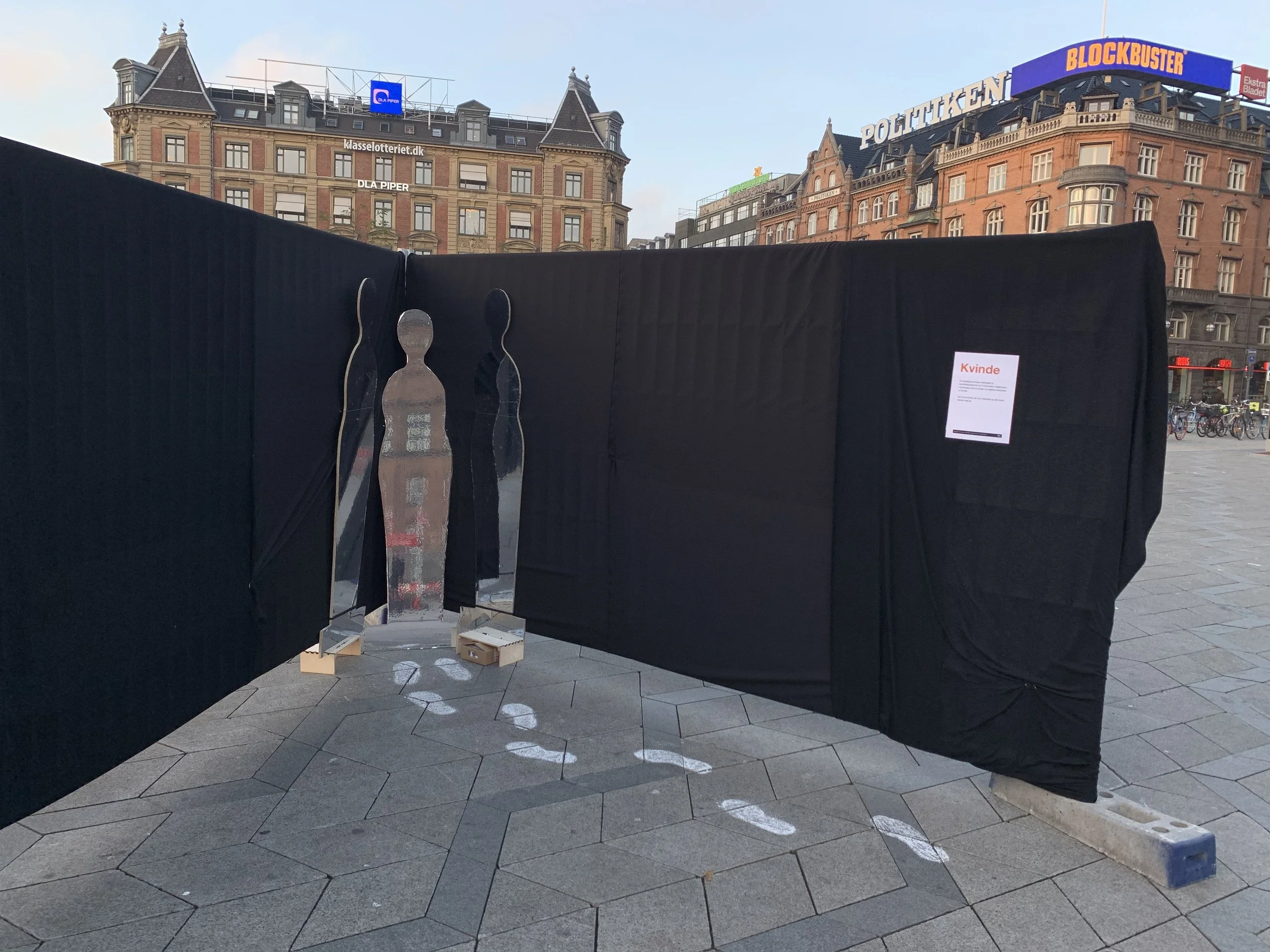
The interactive installation ”KVINDE” was designed to stand in the public sphere to emphasize the gravity of digital violence against women. The design concept was developed in a case on highlighting the concept of ”intimacy”. The concept was developed in cooperation with Danish Women’s Society’s counselling project ”Stop Harassment”. To commemorate FN’s international day of ”End Violence Against Women” on November 25th 2020, Danish Women’s Society held an event at Rådhuspladsen, Copenhagen. ”KVINDE” was designed to be a part of this event and address bypassers.
Background
By gathering knowledge on the subject, interviewing several victims of online harassment, and observing how digital violence is perceived on social media, we learned there is a general lack of empathy towards victims of digital violence. The victims of online harassment may have their personal info or photos shared unwillingly, or receive hateful texts because of what they have said publicly. These victims are often put entirely at fault for the online harassment they receive. They are often being told they should have reacted differently, by not speaking out in public, or by not having any personal photos in risk of being shared to begin with.
Findings
The goal of this project was to explore how an interactive experience can challenge and encourage a greater understanding of digital violence towards adult women. The interactive installation was validated by our interviewed subjects and our partner Danish Women’s Society. Both saw value in the concept of “KVINDE”. Our design will not solve digital violence against women. But by highlighting the social problem in a different design approach, KVINDE has helped emphasizing the gravity of digital violence towards women for unknowledgeable audiences.
An enclosed user interaction
The installation consisted of a room, where three mirrors shaped like female silhouettes stood in center. The mirrors, symbolizing three victims of digital violence, formed an intimate room, where users would go in and get surrounded by their own mirror image.
This motion would make a hidden proximity sensor activate speakers, which would play a recording of a woman’s personal story on experiencing digital violence, while heartbeats and swear words targeting the woman would be heard in the background. Thus, the interaction lied unknowingly within the user.
Finding the right problem
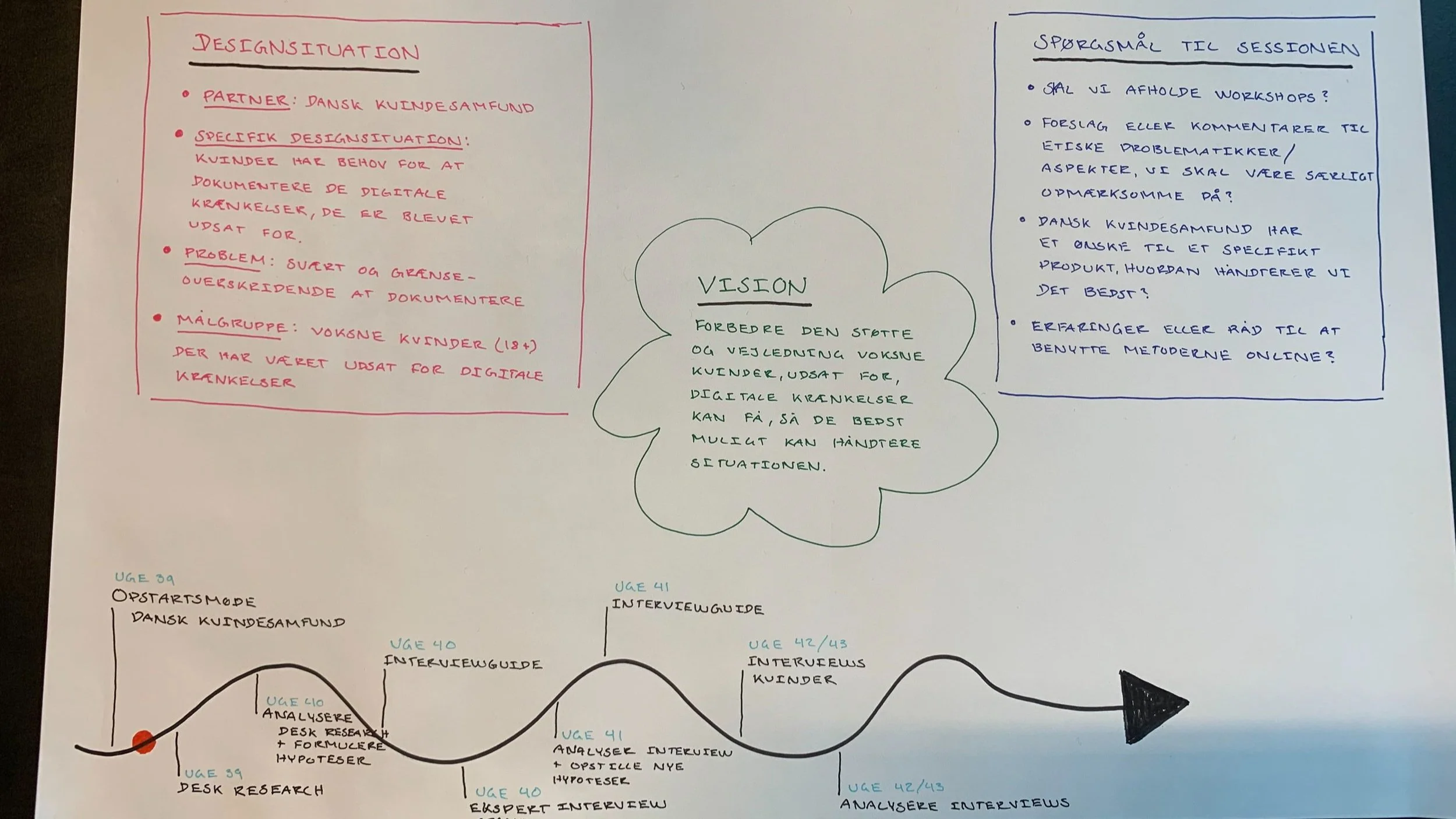
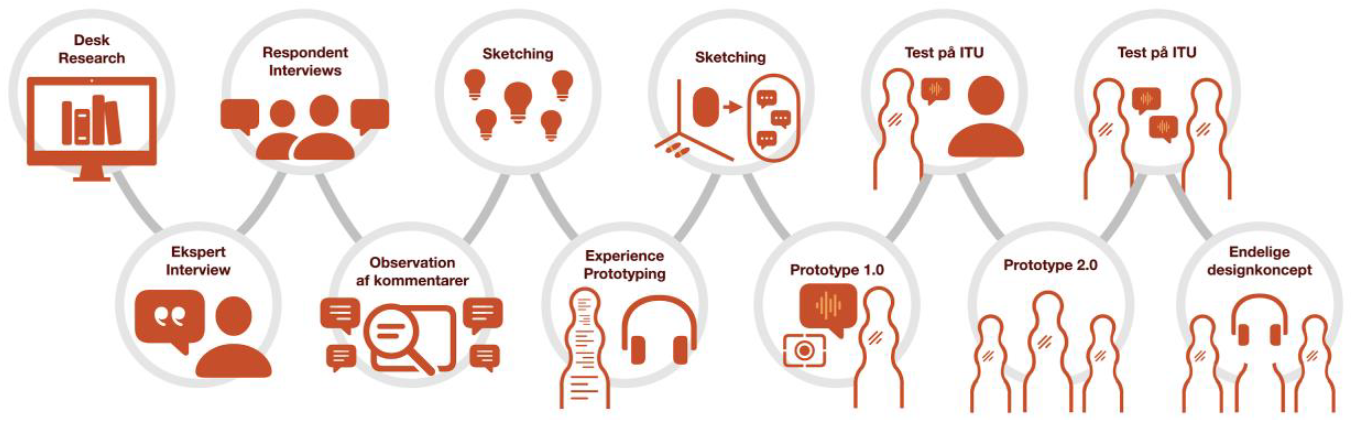
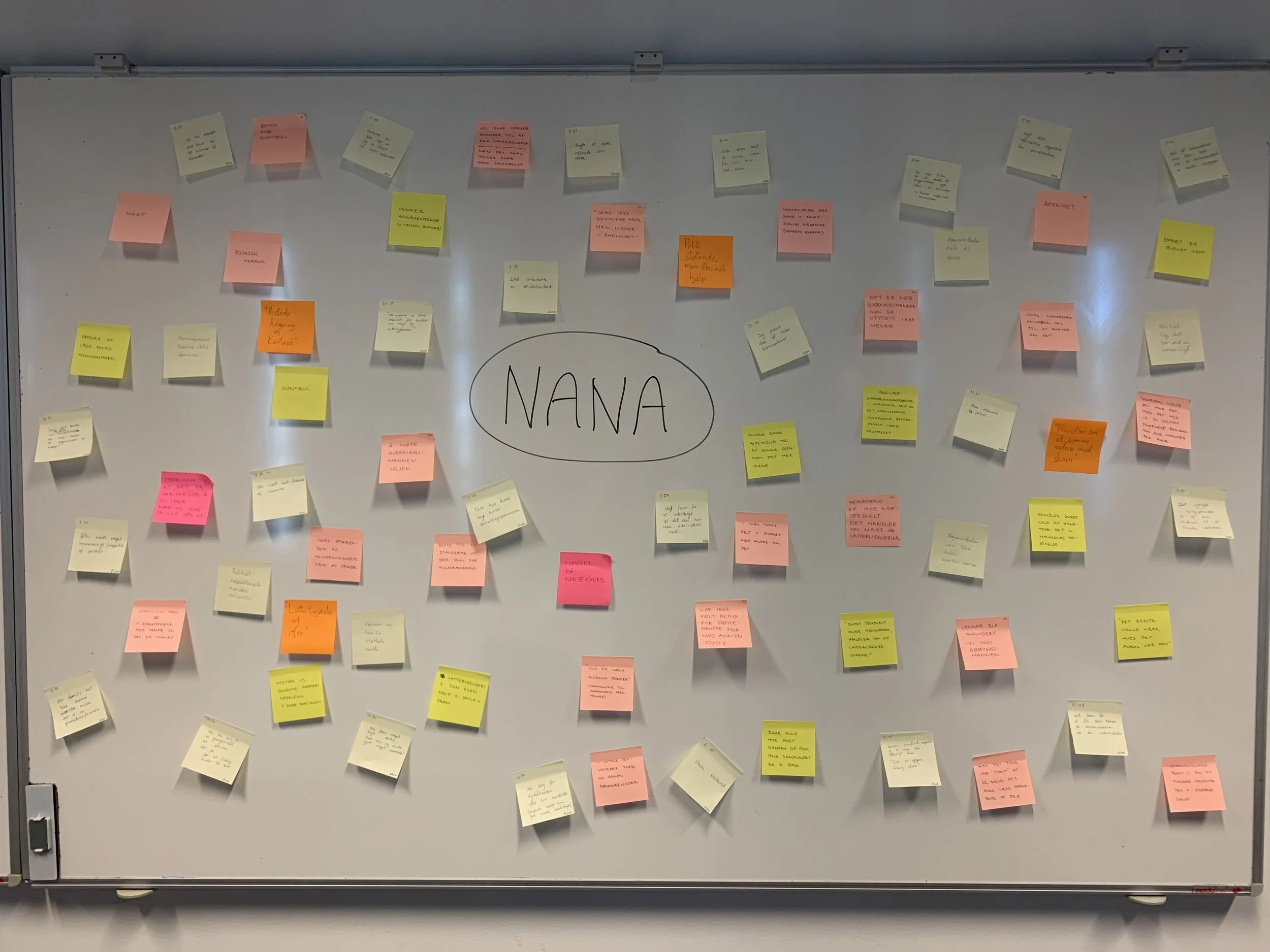
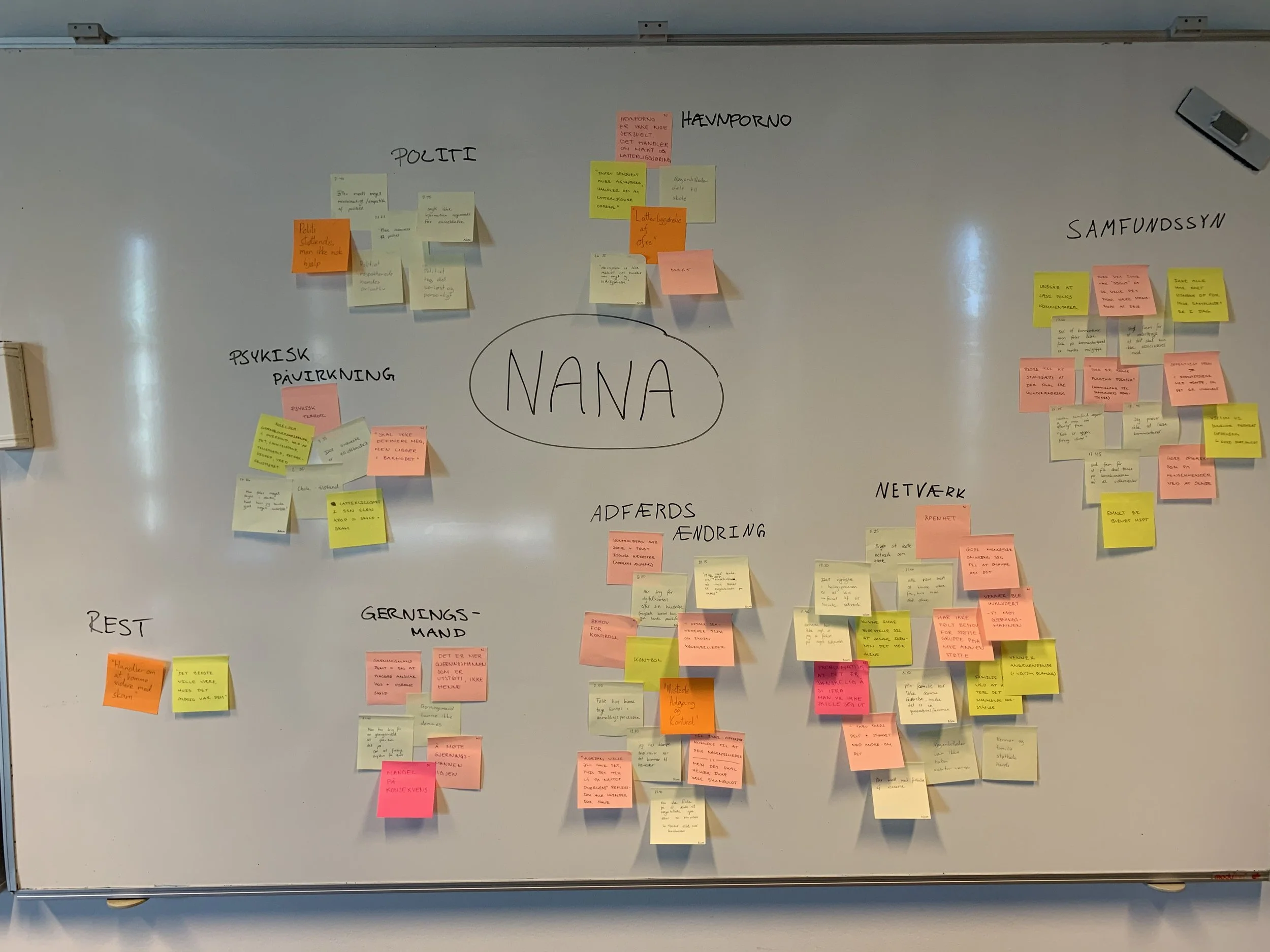
We wanted to explore lack of empathy towards victims of digital violence by creating a design that can reach out to this skeptical audience and make them understand the gravity of digital violence.
Using the method of affinity diagramming, we gathered valuable information about digital violence by writing down any insights gained from our interviewed respondents on post-it notes. Similar notes would then be put into different groups, to identify reoccurring themes. This was done with all three respondents, and the themes would then be ranked by frequency of reoccurrence. This was how we learned the victims find digital violence to be an important social problem that is either ignored or looked down upon by society.
Designing the right solution
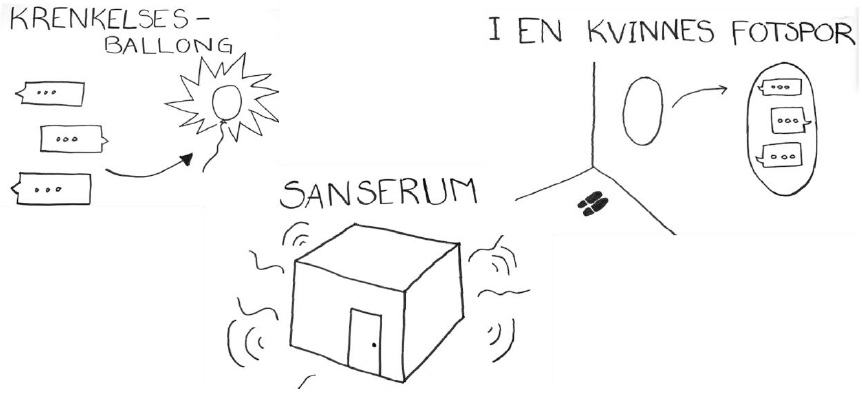
During the idea generation process, the design team and I drew dozens of sketches and chose our preferences after several discussions and reflections. We felt the concept of “In the footsteps of a woman”, where bystanders would create an interaction by walking on footsteps and see online harassment displayed, was the preferred solution when it came to making our target group more aware of digital violence.
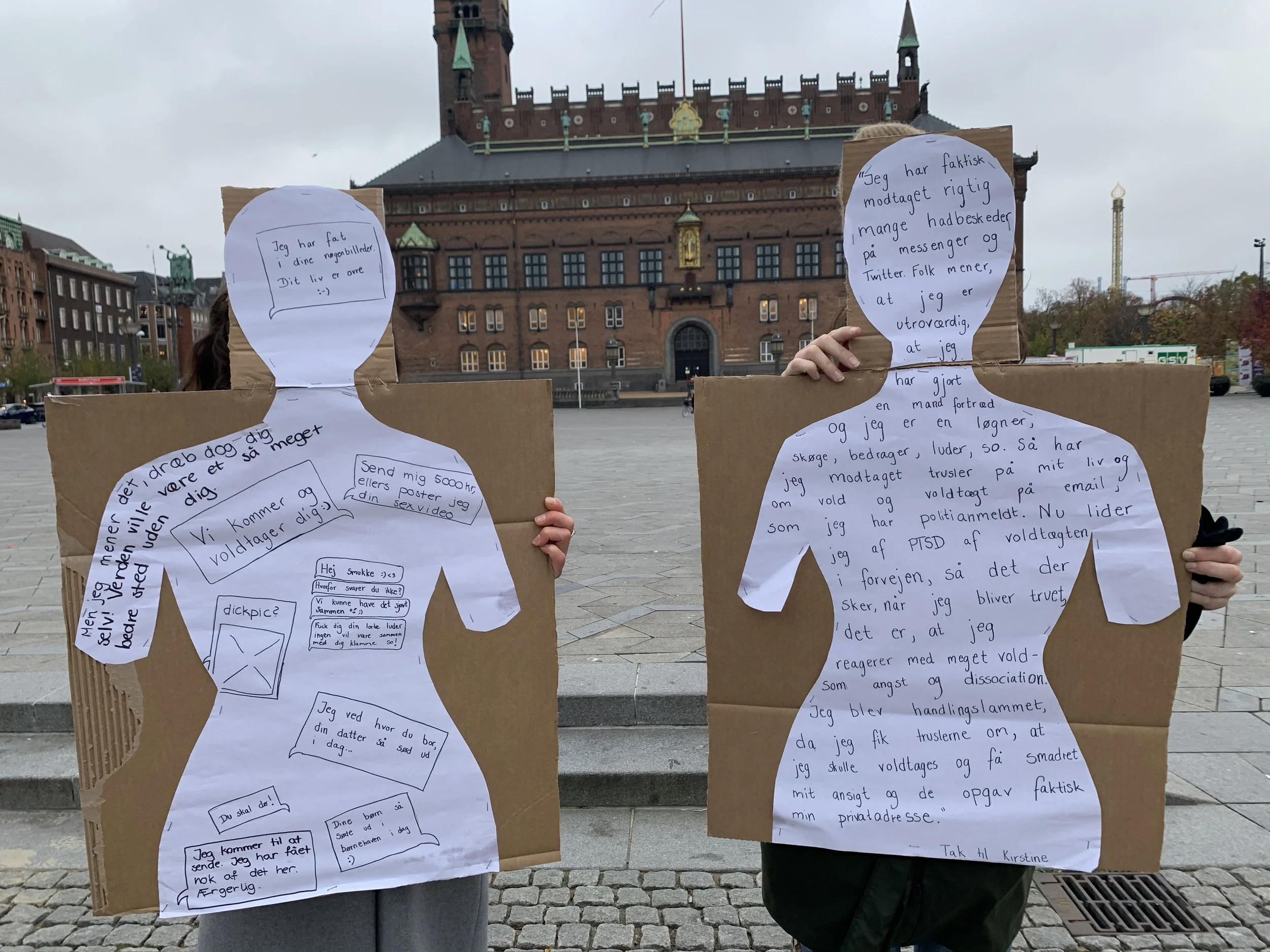
We tested our design solution using two low-fidelity prototypes. One prototype focused on examining what types of reactions you get, when you present digital harassment to bypassers. This prototype consisted of two female silhouettes displaying examples of digital violence.
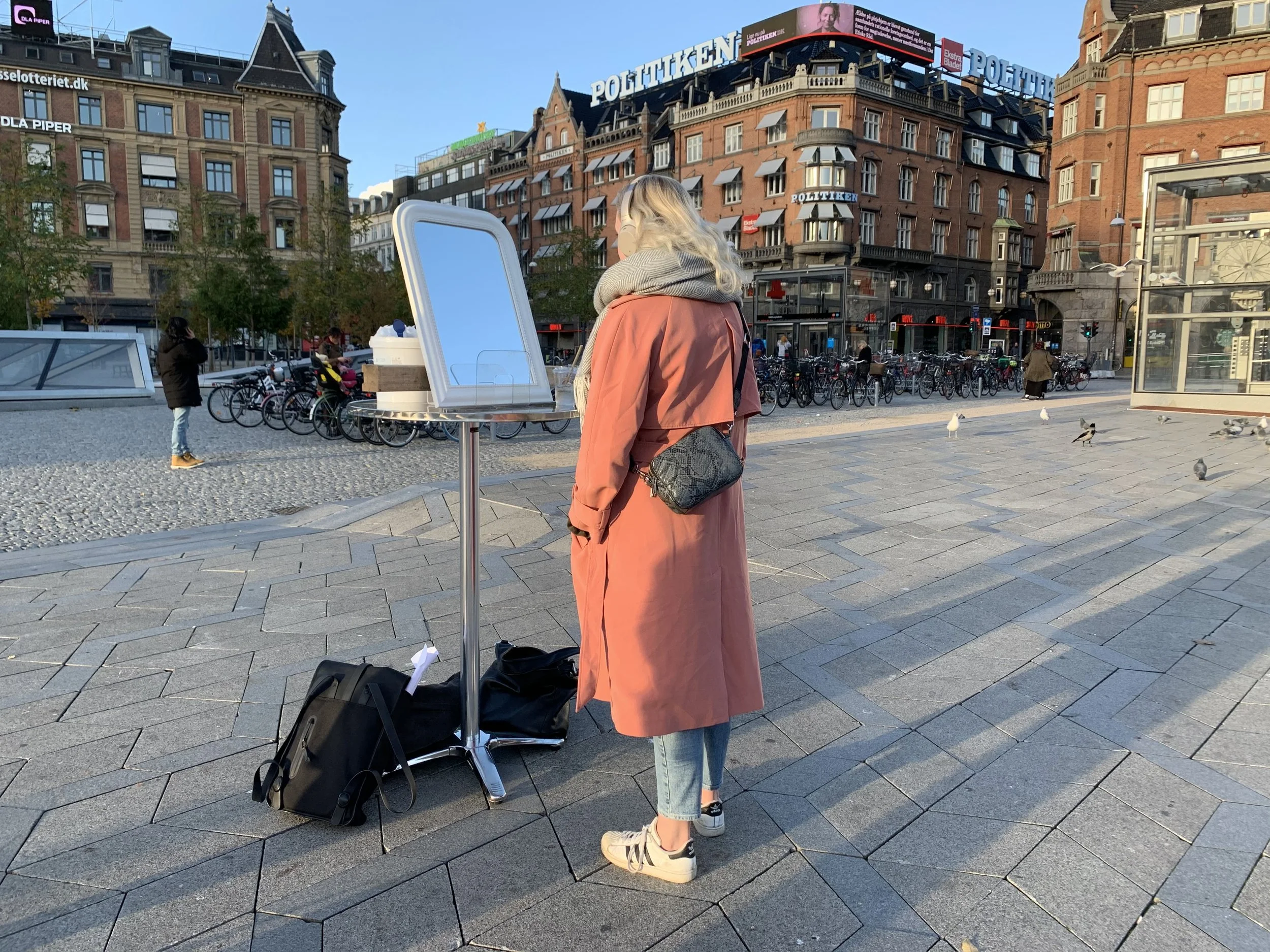
The second prototype focused on what types of reactions an auditory experience could create. This setup consisted of a mirror and a pair of headphones, playing the recording of an interviewed respondent’s personal story of experiencing digital violence. The goal of the mirror was giving the user an experience of embodiment.
The silhouettes garnered greater attention, as several bypassers stopped and read the messages on displayed, but only few examined the silhouettes in depth. The auditory prototype attracted less people but left a larger impact on those who tried it out. Bypassers felt that while the subject of digital violence had been normalized, looking at oneself in the mirror while listening to a victim’s story made it more aware how it could happen to anyone. One bypasser highlighted how because they couldn’t judge the victim by their looks, they were more touched by recording. The auditory experience helped personalize digital violence for bypassers, ultimately emphasizing the social problem to a greater effect.
The low-fidelity prototype user tests gave us important insights in designing the final product. The visual elements of the silhouettes were important in attracting attention from bypassers. The auditory experience created a room for personal storytelling which could gain empathy and reflection from the users.